
DIFC Company Formation and Business Setup Services
Start your DIFC company formation in Dubai International Financial Centre with a service scope built around your actual business activity, ownership and regulatory route. Incorpyfy first confirms whether you need a standard DIFC commercial registration, DFSA authorisation or a specialist structure before you commit to authority or professional fees.
Our DIFC free zone company formation support covers the agreed formation file, submission coordination through the appropriate route, and management of the work through licence and document handover. Your written proposal separates incorporation, licensing, premises, visas, regulatory work and our professional fee, so you can review the expected setup cost before proceeding.
For investors planning a DIFC business setup in Dubai International Financial Centre, the first decision is not a generic package. Whether you are establishing a professional services firm, technology company, regional office, holding vehicle or regulated financial business, you need the correct licence, legal form and approval path for the business you intend to operate.


DIFC Company Formation Services for Regulated and Non-Regulated Businesses
Our DIFC company formation service starts with a commercial and regulatory fit review. We examine what the company will do, where its customers are located, how it will earn revenue, who will own and manage it, whether it will handle client assets or financial products, and what premises and staffing it requires.
The agreed service scope can include:
- Business activity and revenue-model review
- Regulated or non-regulated route assessment
- Company type, ownership and management structure review
- Trade-name, licence and commercial-permission planning
- Individual or corporate shareholder document checklist
- Document certification, legalisation and translation planning where required
- Registered address, workspace and visa requirement review
- Itemised authority-fee and professional-service quotation
- Application preparation and coordination through the appropriate filing route
- Licence, incorporation document and post-registration handover
Incorpyfy provides DIFC business setup and company formation support. Where the proposed activity needs regulated, legal, tax or compliance advice, we define that work separately and coordinate the involvement of an appropriately authorised professional. We do not present ordinary formation support as DFSA authorisation or legal representation.
If business setup in DIFC does not match your activity, budget or operating plan, we can compare it with other options for free zone company formation in Dubai. The recommendation is based on operational fit, not the lowest advertised licence price.
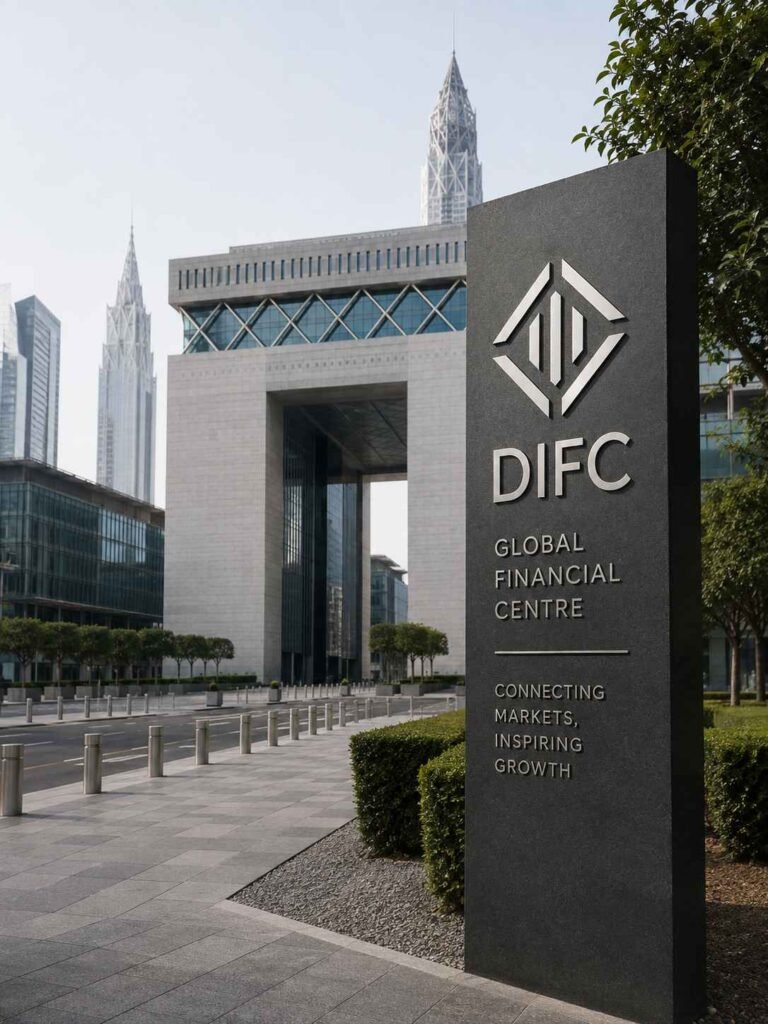
Choose the Correct DIFC Licence and Approval Route
Before starting your DIFC company formation, the right licence and approval route must match the activity you actually plan to carry out. Depending on the business model, this may involve a standard non-regulated commercial licence, DFSA authorisation, an Innovation Licence, or a specialist structure such as an SPV or foundation. We review the activity, ownership, regulatory exposure and operating needs first so the correct route can be identified before the application begins.
Corporate Formation Support for DFSA-Regulated Applicants
A company that intends to conduct financial services in or from DIFC may need authorisation from the Dubai Financial Services Authority. A DIFC commercial licence does not, by itself, permit a firm to conduct financial services that require DFSA approval. The DFSA authorisation process begins with an enquiry and eligibility review before the full application route.
For a regulated proposal, we help organise the corporate formation side of the project and define the specialist work needed for the regulatory application. The review covers the proposed financial services, ownership and group structure, board and senior-management roles, staffing, premises, source of funds and the expected application evidence.
DFSA application work, regulatory business plans, compliance manuals, legal opinions and capital or prudential advice are not included in a standard DIFC company registration scope unless they are expressly listed. Regulatory fees and specialist costs are quoted separately after the activity and authorisation category are confirmed.
Non-Regulated Commercial and Professional Activities
A non-regulated DIFC company setup may suit approved professional, commercial, technology and corporate activities that do not involve carrying on a financial service requiring DFSA authorisation. We confirm the exact activity wording, legal form, ownership, premises, data-protection position and commercial permissions before the formation file is prepared.
This route may be relevant for regional headquarters, consulting firms, technology businesses, corporate service providers and other approved professional operations. Eligibility depends on the actual service and revenue model. A business described as advisory, fintech or investment-related is not treated as non-regulated until its activities have been reviewed.
Innovation, AI and Technology Licence Routes
Eligible technology and innovation businesses may qualify for the DIFC Innovation Licence. The current DIFC private-company handbook publishes an incorporation fee of USD 100 and an annual licence fee of USD 1,500 for the first two years. From years three to seven, continued discounted licensing is subject to the company having 10 or fewer employees and meeting the applicable conditions. The normal commercial licence fee applies from year eight and may apply earlier where the employee limit is exceeded. These charges do not represent the complete cost of establishing and operating the company.
We review the product, technology, customer base, founders, staffing and planned activities before recommending this route. The proposal separates the incorporation fee, licence, coworking or office requirement, visas, data-protection filing, optional support and renewal position. A technology label does not remove the need for DFSA review when the business will conduct regulated financial services.
DIFC SPVs, Foundations and Specialist Structures
DIFC also supports specialist structures such as special purpose vehicles, foundations, family-office arrangements, holding structures and investment-related entities. These routes serve different ownership, succession, asset-holding, financing and governance purposes. They should not be used as substitutes for an operating company without a legal and tax review.
We first identify the commercial purpose, assets, owners, counterparties, staffing and banking expectations. When a specialist structure is suitable, the quotation states the entity route, eligibility evidence, corporate service provider or professional involvement, authority charges and annual obligations. Funds and regulated investment structures are handled through a separate DFSA and legal workstream.
DIFC Company Structures We Help You Assess
DIFC offers different company structures for businesses with different ownership, liability, governance and operating needs. We assess whether a private company, recognised company or branch, partnership, or another permitted structure is better suited to your planned activity. The aim is to select a legal form that fits how the business will be owned and managed before the formation documents are prepared.
Private Company
For DIFC company registration through a private-company route, the approved entity has its own shareholders, directors, registered office and commercial licence. It can be owned by individuals, corporate shareholders or an approved combination. We prepare the ownership information, governance appointments, beneficial-owner details and constitutional-document requirements for the selected route.
Recognised Company or Branch
An existing foreign or UAE company may consider registering a branch or recognised company in DIFC when it wants to operate through the parent entity rather than create a separate subsidiary. We review the parent company’s activity, current registration, constitutional documents, board authority, ownership chain and proposed DIFC operations before confirming the branch route.
Partnership and Other Permitted Legal Forms
Limited liability partnerships, limited partnerships and other permitted forms may suit specific professional, investment or ownership arrangements. The correct option depends on liability, governance, members or partners, regulated status and intended operations. We coordinate the formation assessment and identify where legal or regulatory advice is needed before the application proceeds.
DIFC Company Setup Cost and Fee Scope
The cost of DIFC company formation depends on the company type, activity, regulatory route, workspace, visas, shareholder profile, document condition and specialist support. A standard non-regulated private company, an Innovation Licence, an SPV and a DFSA-regulated firm should not be sold under the same package.
The figures below come from current official DIFC material reviewed on 11 August 2026, including the private-company handbook and fee schedule. Fees can change, so we confirm the current authority schedule before issuing your final quotation.
| Current published charge | Amount | How it applies |
|---|---|---|
|
Private company incorporation |
USD 8,000 |
Current non-financial, non-retail private-company incorporation fee. |
|
Private company commercial licence |
USD 12,000 |
Payable on incorporation and annually for the standard corporate or commercial activity route. |
|
Innovation Licence incorporation |
USD 100 |
Applies to an eligible Innovation Licence entity. |
|
Innovation Licence |
USD 1,500 Yearly |
Applies for the first two years. Continued discounted licensing through years three to seven is subject to the current employee limit and programme conditions. |
|
Establishment card |
USD 618 or USD 656 |
Normal or express charge where an establishment card is required. |
|
Personnel sponsorship deposit |
USD 680 |
Applies where the Personnel Sponsorship Agreement is required. |
|
Data-protection notification |
USD 750 |
Current non-financial charge where the entity states that it processes personal data. Nil is shown where it does not. |
|
Knowledge and Innovation fee |
AED 20 |
Additional fee shown in the current official DIFC schedule. |
The table does not include workspace, visa medical and identity costs, document certification or legalisation, external approvals, banking support, accounting, tax work, regulatory advisers or Incorpyfy’s professional fee. An SPV also has a separately published reduced fee route, but eligibility and the required professional relationship must be confirmed before it is quoted.
For a DFSA-regulated application, the authority fee varies with the financial services and application category. We confirm the current DFSA fee source after the regulated scope has been defined and do not combine it with an ordinary commercial-licence package.
After the initial review, you receive an itemised DIFC company setup proposal showing mandatory authority charges, premises, visas, specialist services, optional support and our professional fee. No payment is requested for an undefined package.
Documents Required for DIFC Company Formation
The documents needed for DIFC company formation depend on the company type, owners, activity and regulatory route. We issue the checklist after the structure is confirmed so you do not legalise, translate or prepare documents that the selected application does not require.
Documents for Individual Shareholders and Founders
- Valid passport copy and identity details for each founder, shareholder, director and authorised signatory
- Residential address, contact information and proof of address where requested
- UAE visa and Emirates ID copies for UAE residents
- Curriculum vitae, professional history or qualification evidence when relevant to the activity
- Proposed company names, activity description and ownership percentages
- Source of funds or wealth information where required by the authority, regulator, bank or service provider
Documents for Corporate Shareholders
- Certificate of incorporation or current commercial registration
- Memorandum, articles or equivalent constitutional documents
- Current registers of shareholders, directors and beneficial owners
- Board resolution approving the DIFC company or branch and its authorised signatories
- Group ownership chart showing the complete chain to the ultimate beneficial owners
- Certificate of good standing or incumbency where requested
- Legalisation, UAE attestation and certified translation where applicable
Additional Documents for Regulated Applications
A regulated financial-services application normally requires a much deeper file. This can include a regulatory business plan, organisation chart, board and senior-management CVs, group structure, parent authorisations, source of wealth and funds, financial information, risk controls, AML procedures and other evidence requested by the DFSA. The final requirements depend on the financial services and applicant profile.
Our DIFC Company Formation Process
Our DIFC company formation process is structured around the specific activity, ownership and approval requirements of your business. We first confirm the suitable licence and entity route, then coordinate the documents, application, premises and authority requirements through to licence handover. Where DFSA approval or specialist professional support is required, we identify and coordinate that work separately so each stage of the setup is clear from the beginning.
1: Business and regulatory assessment
At the start of the DIFC company formation process, we review the activity, customers, revenue, ownership, management, staffing, premises and whether any proposed service may require DFSA authorisation.
2: Entity, DIFC licence and fee scope
We confirm the recommended company type, commercial permissions, regulated or non-regulated route, workspace position and an itemised setup quotation.
3: Formation file preparation
We issue the document checklist, review names and ownership details, organise the application information and coordinate certification, legalisation or translation where required.
4: Application coordination
We coordinate the DIFC corporate formation submission included in the engagement. Where DFSA authorisation or specialist legal and regulatory work is required, we coordinate the separately appointed authorised workstream and its document dependencies.
5: Conditions, premises and payments
We track the conditions that must be completed before incorporation or licensing, including the registered address, authority payments and any separate regulatory or professional requirements.
6: Licence and document handover
We organise the company documents and commercial licence issued for the approved route, then confirm the establishment, visa, banking, accounting and compliance actions that remain.
There is no single reliable timeline for every DIFC business setup. A non-regulated private company, corporate shareholder, Innovation Licence, SPV and DFSA-regulated firm follow different review paths. Your proposal gives a planning range only after the complete profile and documents have been assessed. Authority review, regulatory questions, premises, legalisation and applicant response times can extend the process.
Office, Visa and Bank Account Coordination
Setting up a DIFC company involves more than obtaining the commercial licence. We also help coordinate the practical requirements that may follow, including a suitable registered office, establishment and visa arrangements, and preparation for corporate bank account onboarding. Each requirement is reviewed according to your company structure, staffing plans and operational needs so you understand what is required and which costs sit outside the core formation scope.
DIFC Registered Office and Workspace
A DIFC registered company generally needs a registered office address within DIFC, subject to the rules for its company type and any permitted sharing or specialist arrangement. We confirm the premises requirement before you accept a lease, coworking option or office proposal. Workspace cost and visa capacity are shown separately from the commercial licence.
Establishment and Visa Support
Where residence visas are required, we confirm the establishment-card position, sponsorship agreement, available workspace allocation and the applicant documents needed for the next stage. Medical testing, Emirates ID, health insurance and immigration charges are quoted according to the number and status of applicants rather than included in a generic formation price.
Corporate Bank Account Preparation
After licensing, we help organise the company profile, ownership documents, expected transactions, source-of-funds evidence, customer and supplier information and other records commonly requested by banks.
Bank approval, account type, onboarding questions and timing remain entirely with the selected bank. We provide preparation and coordination support without guaranteeing an account or a specific approval date.
Accounting, VAT and Post-Registration Readiness
A DIFC company is not automatically exempt from UAE tax, accounting or record-keeping duties. The position depends on the entity, activities, income and applicable rules. After DIFC company registration, you can add accounting services in Dubai for bookkeeping and reporting, or request support from our VAT consultants in Dubai when registration, filing or transaction review is needed.
Why Businesses Choose Incorpyfy for DIFC Company Formation
Businesses choose Incorpyfy for DIFC company formation because we focus on the actual requirements of each setup rather than offering a fixed package. We review the business activity, ownership, regulatory exposure and operating plan, then provide a clearly defined scope with itemised authority, professional and optional service costs. Our support can also continue after licensing with visas, banking preparation, renewals, accounting and other agreed post-registration services.
A DIFC Setup Route Based on the Actual Business
We do not force every DIFC business setup into the same package. The proposed activity, customer relationship, ownership, financial-service exposure and operating plan determine the recommended route.
One Coordinator With a Defined Service Boundary
You receive one point of contact for the formation work included in the engagement. Regulated, legal, tax and specialist services are identified separately, so you know who is responsible for each part of the application.
Itemised Authority and Professional Costs
The written quotation separates DIFC or DFSA charges, workspace, visas, external professionals, optional post-registration support and our fee. This gives you a realistic first-year scope and a clearer view of annual obligations.
Support That Continues After Licensing
Our work can continue after formation through amendments, renewals, visa coordination, banking preparation, bookkeeping, VAT support and other agreed services. Each additional service is quoted according to the work required rather than treated as automatically included.
Ready to Begin? Start Your Business Journey Today!
Unlock Business Success: Take the First Step with Our Expert Guidance Towards Your Entrepreneurial Dreams.
DIFC Company Formation FAQs
How much does DIFC company formation cost?
For the standard non-financial and non-retail private-company route, DIFC’s March 2026 handbook publishes a USD 8,000 incorporation fee and a USD 12,000 commercial licence fee payable on incorporation and annually. Workspace, visas, data protection, documents, professional services and any DFSA work are additional. Innovation Licence, SPV, retail and regulated routes use different fees.
Does every DIFC company need DFSA approval?
No. DFSA authorisation is required when a firm will conduct financial services in or from DIFC that fall within the regulated scope. Non-regulated commercial and professional businesses normally follow the Registrar of Companies route, but the actual activity must be reviewed before this is confirmed.
Can a foreign investor own a DIFC company?
Foreign individuals and companies can establish approved DIFC structures, subject to the selected entity, activity, ownership review, regulatory requirements and supporting documents. Corporate ownership usually requires a fuller group and beneficial-ownership file.
How long does business setup in DIFC take?
The timeline depends on the company type, regulated status, shareholder profile, document condition, premises and authority questions. We provide a route-specific planning range after reviewing the complete file and do not promise one timeline for every applicant.
Does a DIFC company need an office?
A registered office in DIFC is generally required, subject to the rules for the company type and any approved workspace or sharing arrangement. We confirm the acceptable premises route and related cost before you sign a workspace agreement.
Can Incorpyfy guarantee a DIFC corporate bank account?
No. We prepare the company and banking documents, help present the business profile and coordinate responses where included. The bank alone decides whether to approve the application, what information it needs and how long its review takes.
What is included in Incorpyfy's DIFC formation service?
The agreed scope can cover activity and route review, company-structure assessment, document checklist, application preparation, submission coordination, authority follow-up and licence-document handover. Workspace, visas, DFSA work, legal advice, banking, accounting and tax support are included only when listed in the written quotation.
Is the DIFC Innovation Licence the same as DFSA authorisation?
No. The DIFC Innovation Licence is a commercial licence route for eligible technology and innovation businesses. It does not authorise a company to conduct regulated financial services. A fintech or technology business may still require DFSA review depending on what it actually does.
Can a DAFZA company operate in the Dubai mainland?
The permitted route depends on the activity and transaction. DAFZ lists a Dual Licence with DET for eligible DAFZA companies, subject to the relevant conditions. Other mainland sales or operating arrangements may require a separate review.
Does a DAFZA company pay Corporate Tax?
DAFZA companies are within the UAE Corporate Tax regime. A Qualifying Free Zone Person may receive a 0% rate on qualifying income when all legal conditions are met. This does not remove the need to assess registration, filing, accounting and record-keeping duties.