


Summary
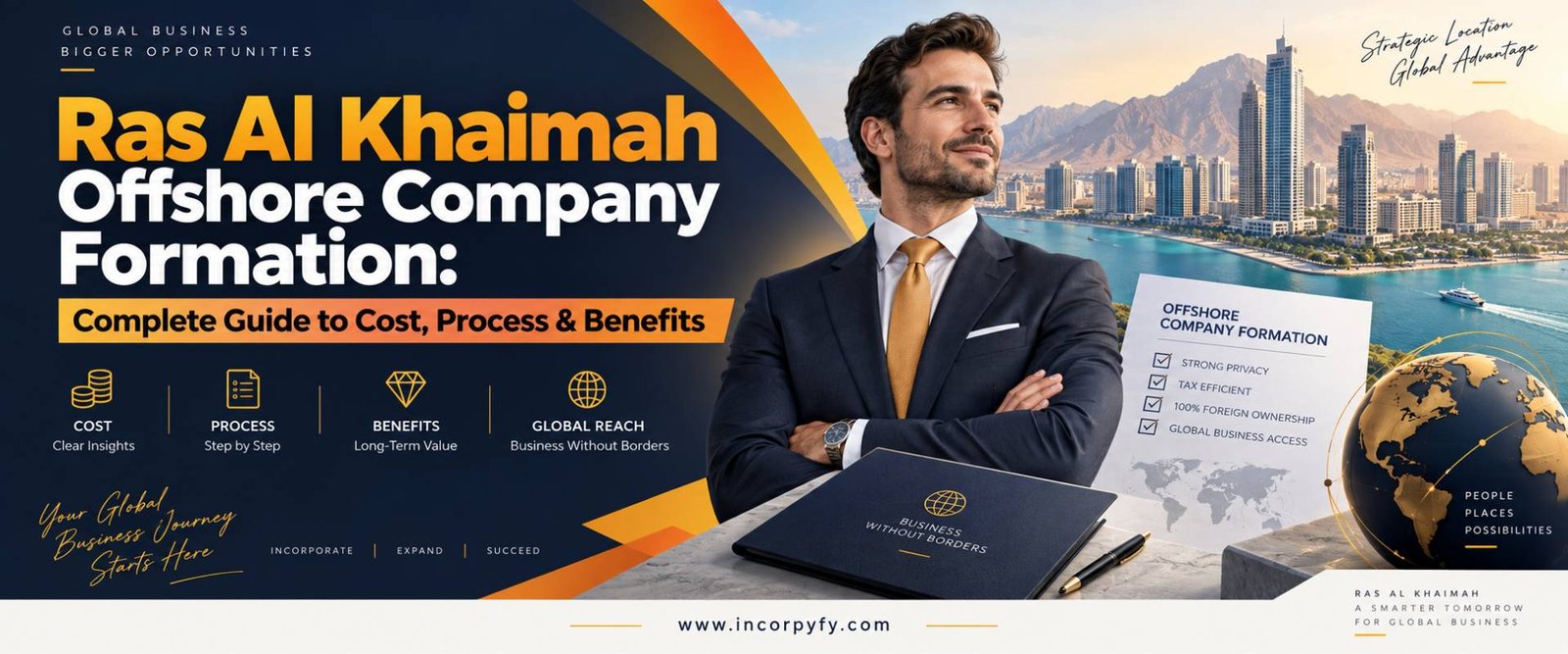
Ras Al Khaimah offshore company formation lets international investors register a tax-efficient holding or trading entity through RAK ICC, with 100% foreign ownership, no minimum capital, and no requirement to file annual accounts. This guide covers RAK ICC structures, documents, cost, timeline, permitted activities, and how RAK compares to JAFZA offshore, so you can decide if it fits your business.
Ras Al Khaimah has quietly become one of the most practical offshore jurisdictions in the UAE for holding companies, international trading structures, and wealth planning vehicles. Registered through RAK International Corporate Centre (RAK ICC), a RAK offshore company gives investors a legally recognized entity outside their home country without the overheads of a physical office or a UAE residency requirement. This guide breaks down exactly what a RAK offshore company can and cannot do, what it costs, how long it takes, and where it fits against alternatives like JAFZA offshore or a RAK free zone company.
What Is a RAK Offshore Company?
A RAK offshore company, formally known as an International Business Company (IBC), is a corporate structure registered with RAK International Corporate Centre that operates outside the UAE’s domestic market. It is designed for international business, asset holding, and investment activity rather than for trading goods or services within the UAE itself. Unlike a mainland or free zone company, a RAK offshore company does not require a physical office, cannot sponsor UAE residence visas on its own, and is not permitted to conduct business directly with UAE customers.
This makes Ras Al Khaimah offshore company formation particularly attractive for holding company structures, international trading businesses that operate outside the UAE, intellectual property holding entities, and investors who want a stable, reputable jurisdiction to hold shares, real estate, or other assets without relocating operations to the UAE.
Why Choose Ras Al Khaimah for Offshore Company Formation
Investors comparing offshore jurisdictions across the UAE and beyond consistently narrow their shortlist down to Ras Al Khaimah for a few practical reasons:
- 100% foreign ownership with no UAE national shareholder or local sponsor required
- No minimum share capital, so companies can incorporate without depositing capital in a UAE bank
- No requirement to file annual financial accounts with the registrar, reducing ongoing administrative overhead
- Access to the UAE’s double tax treaty network, covering well over a hundred countries
- Common law legal framework, with access to DIFC and ADGM courts for dispute resolution
- Fast incorporation, typically completed within a few working days once documentation is in order
- Lower setup and renewal costs compared with several other UAE offshore jurisdictions
Together, these features explain why Ras Al Khaimah offshore company formation has become a preferred route for holding structures and international business, alongside more established options like Dubai offshore company formation.
RAK ICC: The Regulator Behind RAK Offshore Companies
RAK International Corporate Centre, commonly known as RAK ICC, is the government-backed registry responsible for incorporating and regulating offshore companies in Ras Al Khaimah. It was formed by consolidating earlier offshore registries under a single legal framework governed by RAK ICC’s Business Companies Regulations. RAK ICC does not deal directly with individual applicants. Instead, every company must be incorporated and maintained through an accredited Registered Agent, who submits documentation, liaises with the registry, and provides the company’s mandatory registered address in the UAE.
This registered agent model is standard across offshore jurisdictions worldwide and exists to ensure a licensed intermediary verifies documentation and beneficial ownership before a company is incorporated.
Types of RAK Offshore Company Structures
RAK ICC offers more structural flexibility than most people expect from an offshore jurisdiction. Depending on your objective, you can register one of several company types.
Company Limited by Shares (CLS)
The most commonly used structure, where shareholder liability is limited to the value of unpaid shares. A CLS can have up to fifty shareholders, making it suitable for holding companies, joint ventures, and international trading entities.
Company Limited by Guarantee (CLG)
Typically used for non-profit or membership-based structures, where members guarantee a fixed sum rather than holding shares.
Restricted Purposes Company (RPC)
A special purpose vehicle limited to a maximum of two specific activities, often used for single-asset holding or a narrowly defined transaction structure.
Segregated Portfolio Company (SPC)
Allows ring-fenced portfolios within a single legal entity, commonly used for fund structures, insurance-linked vehicles, or investors managing multiple asset pools that need to remain legally separate.
Unlimited Company
A less common hybrid structure where shareholders carry unlimited liability, generally used only in specific legal or tax planning scenarios rather than standard commercial use.
Business Activities Permitted for a RAK Offshore Company
Understanding what a RAK offshore company can and cannot do is essential before you register, since misunderstanding this point is one of the most common reasons investors choose the wrong structure.
Permitted activities include:
- International trading conducted outside the UAE
- Holding shares in other companies, whether onshore or offshore
- Holding real estate, with a No-Objection Certificate required for each property transaction
- Holding and licensing intellectual property such as trademarks and patents
- Investment and wealth structuring activities
- Consultancy and professional services rendered outside the UAE
Restricted or not permitted:
- Conducting direct trade or business with UAE-based customers
- Operating a retail outlet, showroom, or service premises inside the UAE
- Sponsoring UAE residence visas under a standard offshore structure
- Receiving customer walk-ins or deliveries at the registered agent’s address
A handful of activities, such as banking, insurance, or fund management, are technically permitted but only where the company meets UAE Economic Substance Regulations, which typically means maintaining real operational presence rather than a purely nominal structure.
Documents Required to Register a RAK Offshore Company
Documentation requirements differ slightly depending on whether shareholders are individuals or corporate entities.
For individual shareholders and directors:
- Valid passport copy
- Proof of residential address, such as a recent utility bill or bank statement
- A short personal and professional profile
- Three proposed company names in order of preference
- A bank reference letter or certificate of good standing
For corporate shareholders:
- Certified copy of the Certificate of Incorporation
- Current business license or equivalent regulatory document
- Memorandum and Articles of Association of the corporate shareholder
- Board resolution authorizing the RAK offshore incorporation
- Power of attorney authorizing the signatory, where applicable
- Passport copies and profiles of all directors and ultimate beneficial owners
One advantage of RAK ICC over several other jurisdictions is that foreign corporate documents generally do not require notarization or apostille legalization, which meaningfully shortens preparation time for international applicants.
Step-by-Step Process to Set Up an Offshore Company in Ras Al Khaimah
- Choose your company type and structure. Decide between a Company Limited by Shares, a Segregated Portfolio Company, or another IBC type based on your intended use.
- Select your business activities and reserve a name. Submit three proposed company names and confirm the specific activities your offshore company will carry out.
- Appoint a RAK ICC Registered Agent. All applications must go through an accredited agent, since RAK ICC does not accept direct applications from investors.
- Prepare and submit your documentation. Your registered agent compiles shareholder and director documents, beneficial ownership details, and the completed application forms.
- Pay the incorporation fees. Fees vary depending on whether you register for one, two, or three years upfront.
- Receive your Certificate of Incorporation. RAK ICC issues incorporation electronically, typically within two working days of complete document submission.
- Open a corporate bank account. This is a separate process from incorporation and usually takes several additional weeks once your certificate is issued.
RAK Offshore Company Formation Cost
Costs are published by RAK ICC and structured around multi-year incorporation and renewal packages, which generally work out cheaper per year the longer you commit upfront.
| Service | Approximate Cost (AED) |
|---|---|
| Incorporation, one year | 3,250 |
| Incorporation, two years | 6,700 |
| Incorporation, three years | 9,600 |
| Annual renewal, one year | 3,950 |
| Annual renewal, three years | 10,650 |
| Certificate of Good Standing | 750 |
| Certificate of Incumbency | 1,000 |
| Same-day urgent processing | 1,250 |
| Additional shareholder or director fee (per person, beyond three) | 200 to 400 |
| Property-related NOC (per property) | 1,250 |
| RAK ICC Foundation registration | 1,500 |
On top of RAK ICC’s own fees, expect additional charges from your registered agent for document handling, translation, and ongoing compliance support. Most investors budget a total first-year cost somewhere between AED 6,000 and AED 15,000 depending on structure complexity and the number of shareholders involved. If a lower-cost jurisdiction is a priority, it is worth comparing this against our guide to the cheapest offshore company formation in the UAE before finalizing your choice.
Timeline: How Long Does RAK Offshore Company Formation Take
With complete documentation submitted through a registered agent, RAK ICC typically issues the Certificate of Incorporation within two working days. In practice, most investors should budget five to ten working days from initial document collection to receiving their certificate, once you account for gathering shareholder documents, name approval, and agent processing. Opening a corporate bank account afterward is a separate and generally slower process, often taking four to eight weeks depending on the bank and the nature of your business activity.
RAK ICC vs JAFZA Offshore: Which Should You Choose?
RAK ICC and JAFZA offshore are the two most established offshore options in the UAE, and the right choice depends on what your company is actually going to do.
| Factor | RAK ICC Offshore | JAFZA Offshore |
|---|---|---|
| Setup and renewal cost | Generally lower | Generally higher |
| Incorporation speed | Often a matter of days | Slightly longer due to additional approval steps |
| Property holding | Not specifically positioned for Dubai property | Established choice for holding freehold property in approved Dubai areas |
| Banking relationships | No specific banking advantage | Dubai base can simplify account opening with some Dubai banks |
| Best suited for | Cost-efficient international holding and trading structures | Investors prioritizing Dubai real estate holding |
| Registered agent requirement | Mandatory | Mandatory |
If your primary goal is holding freehold property in Dubai, JAFZA offshore remains the more established route. If you are prioritizing cost efficiency, faster turnaround, and flexible international structuring, Ras Al Khaimah offshore company formation is typically the stronger fit. Investors weighing both options against onshore alternatives may also want to review offshore company formation in Dubai or our broader guide on how to open an offshore company in the UAE before deciding.
Can a RAK Offshore Company Get a UAE Residence Visa?
No. A standard RAK offshore company cannot sponsor UAE residence visas for its shareholders, directors, or employees, since it has no physical office and is not licensed to operate domestically within the UAE. If visa eligibility matters to you, you will need a separate mainland or free zone entity, such as a RAK free zone business setup or a company registered under Ras Al Khaimah free zone company formation. Many investors run a dual structure: an offshore company for asset holding and tax efficiency, paired with a free zone or mainland company for physical operations and visa sponsorship. If residency itself is your goal, our guide to the Golden Visa in Ras Al Khaimah covers a separate, purpose-built route.
Banking for a RAK Offshore Company
Opening a corporate bank account is handled separately from incorporation and is often the step that takes the longest. UAE banks apply their own due diligence standards, and approval depends heavily on the nature of your business activity, the transparency of your ownership structure, and supporting documentation such as a business plan and proof of source of funds. Some investors choose to open accounts outside the UAE instead, depending on where their business activity is concentrated. If you plan to eventually add a UAE operating entity alongside your offshore structure, our guide to opening a corporate bank account in Dubai walks through what banks typically require.
Compliance and Renewal Requirements
A RAK offshore company is not a one-time registration. Ongoing obligations include:
- Annual license renewal, with a 30-day grace period after expiry before late penalties apply
- Ultimate Beneficial Owner (UBO) reporting, with any change in beneficial ownership required to be reported within a short window after it occurs
- Anti-Money Laundering (AML) compliance, in line with UAE federal requirements
- Economic Substance Regulations (ESR), which apply if your company conducts specific relevant activities such as holding, financing, or intellectual property licensing
- No mandatory annual account filing, though maintaining internal financial records is still considered good practice and may be requested by banks
Missing renewal deadlines triggers graduated late fees, and a company left unrenewed for an extended period can eventually be struck off the register, though restoration is usually possible within a few years if outstanding fees and penalties are settled.
Common Mistakes to Avoid When Setting Up a RAK Offshore Company
- Assuming an offshore company can trade directly with UAE customers, which is not permitted under the structure
- Registering without a clear plan for banking, since account opening is not guaranteed and should be planned for in advance
- Choosing the wrong IBC type, such as a Restricted Purposes Company for a business needing more than two activities
- Overlooking Economic Substance Regulations for activities like holding or IP licensing that may require demonstrable substance
- Missing the UBO reporting window after a change in beneficial ownership
- Treating the offshore company as a substitute for a free zone or mainland license when visa sponsorship is actually needed
How Incorpyfy Can Help You Set Up a RAK Offshore Company
Incorpyfy works as a registered agent partner to guide investors through the full RAK ICC process, from selecting the right IBC structure and preparing shareholder documentation through to incorporation and post-registration banking support. If you are still deciding between an offshore structure, a free zone company, or full business setup in Dubai, our consultants can map out the combination that actually matches your operating model rather than defaulting to the cheapest option on paper.
Frequently Asked Questions
What is the minimum share capital for a RAK offshore company?
There is no minimum share capital requirement, and companies can be incorporated without depositing capital into a UAE bank account.
How much does Ras Al Khaimah offshore company formation cost?
Government incorporation fees start at around AED 3,250 for a one-year registration, with most investors budgeting a total first-year cost between AED 6,000 and AED 15,000 once agent and compliance fees are included.
How long does it take to register a RAK offshore company?
RAK ICC typically issues the Certificate of Incorporation within two working days of complete documentation, though most investors should allow five to ten working days overall for document preparation and agent processing.
Can a RAK offshore company own property in the UAE?
Yes, subject to obtaining a No-Objection Certificate for each property transaction, which carries its own separate fee.
Do I need a registered agent to set up a RAK offshore company?
Yes. RAK ICC does not accept applications directly from investors, so every offshore company must be incorporated and maintained through an accredited Registered Agent.
Is RAK ICC better than JAFZA offshore?
Neither is universally better. RAK ICC generally offers lower cost and faster incorporation, while JAFZA offshore remains the more established choice for holding freehold property in Dubai.
Does a RAK offshore company need to file annual accounts?
No, RAK ICC does not require offshore companies to file annual financial accounts with the registrar, though maintaining internal records is still recommended.
Can a RAK offshore company sponsor employee visas?
No, a standard RAK offshore company cannot sponsor UAE residence visas. A separate free zone or mainland entity is required if visa sponsorship is needed.
Is RAK offshore company formation subject to UAE corporate tax?
Companies with no UAE-sourced income are generally outside the scope of UAE Corporate Tax, though this depends on individual circumstances and should be confirmed against current Federal Tax Authority guidance.
Final Thoughts
Ras Al Khaimah offshore company formation gives international investors a cost-efficient, well-regulated structure for holding assets, protecting intellectual property, and running international business outside the UAE’s domestic market. It is not a substitute for a free zone or mainland license if you need a physical presence or visa sponsorship, but for the purposes it is designed for, RAK ICC remains one of the most practical offshore options in the region. If you want help choosing the right structure and getting it registered correctly the first time, Incorpyfy’s consultants can guide the entire process from documentation through incorporation.