

Summary
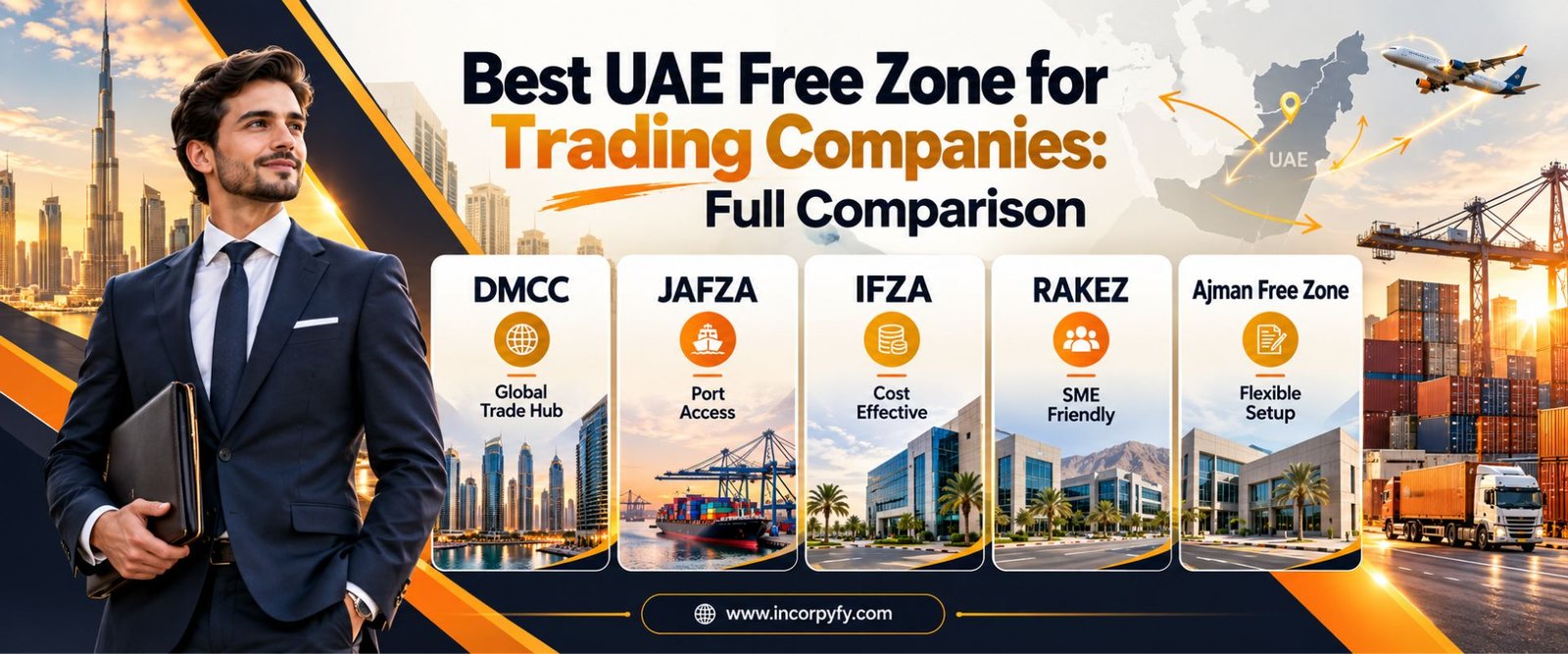
The best UAE free zone for trading depends on what you trade and how much. DMCC suits commodities such as metals, energy and agricultural goods. JAFZA suits high-volume import and export through Jebel Ali Port. IFZA, Ajman and UAQ offer the lowest-cost general merchandise licences. This guide compares costs, activities and port access, with a decision matrix by commodity and volume.
What Does a UAE Trading License Cover?
A trading licence lets your company buy and sell goods. In the UAE, that usually falls into three categories, and the one you pick changes your cost, your free zone options and what you can legally list on your licence.
- General trading: A broad licence that covers multiple product categories, often used by merchandise traders and distributors. Many zones restrict or add extra approvals for sensitive goods.
- Specific commodity or product trading: A licence tied to named goods, such as electronics, building materials, food or precious metals.
- Import and export or re-export: Focused on moving goods across borders, often combined with warehousing and customs-bonded storage.
Two points trip up new traders. First, free zone companies are generally restricted from direct retail sales to mainland customers, so selling to Dubai shops or consumers usually needs a mainland licence or a distributor. Second, regulated goods such as food, pharmaceuticals, precious metals and chemicals can require extra approvals no matter which zone you choose.
Tax matters too. UAE corporate tax is 9% on profit above AED 375,000, and 0% applies only to Qualifying Free Zone Persons on qualifying income. Trading profits do not always qualify, so structure carefully. Read our guide to corporate tax for mainland and free zone companies before you decide.
For a plain-English overview, see why you should get a general trading licence in the UAE and our general trading licence service page.
Top UAE Free Zones for General Trading Companies
Here is how the main choices compare. Costs are indicative and vary by package, visas and office type, so confirm a written quote.
| Free zone | Best for | Indicative entry cost | Strength |
|---|---|---|---|
| DMCC | Commodities, gold, metals, energy, agri | About AED 18,000 to 25,000 in year one | Premium reputation and commodity ecosystem |
| JAFZA | High-volume import and export, warehousing | From about AED 10,500 licence | Jebel Ali Port access and logistics |
| IFZA | General merchandise, lean traders | About AED 12,000 to 16,500 | Bundled activities, no paid-up capital |
| Ajman Free Zone | Low-cost general trading | From about AED 5,555 | Low entry price and clear package tiers |
| UAQ FTZ | Budget trading | From about AED 5,500 | Lowest headline price |
| Dubai South | E-commerce and product trading near Al Maktoum Airport | Varies by package | Air cargo and logistics access |
Compare real first-year totals, not headlines, because visas, deposits and office rent change the picture quickly. Our roundup of the best free zones in the UAE and the cheapest free zones in the UAE give more context.
DMCC for Commodity Trading: Metals, Energy, Agricultural
DMCC was built around commodities, and it still dominates that space. If you trade gold, diamonds, metals, energy, tea or coffee, DMCC offers an ecosystem of refiners, brokers, banks and logistics providers that other zones struggle to match.
Why traders choose DMCC:
- Dedicated licence categories for precious metals and stones, with specific rules for gold and diamonds
- Access to DMCC Tradeflow, its digital trade platform that supports trade documentation and financing
- A recognised address that can ease conversations with banks and international counterparties
- Strong credibility for higher-risk or higher-value trades
What to budget for:
- Year-one costs of roughly AED 18,000 to 25,000, with higher renewals
- AED 50,000 deposited share capital for General Trading licences
- A mandatory annual audit
- Physical premises in Jumeirah Lakes Towers
For activity-specific detail, see our guides to the DMCC trading licence, DMCC precious metals and stones licence and gold trading licence in Dubai, plus our DMCC free zone service page.
JAFZA for Import/Export: Jebel Ali Port Access
If your business moves containers, JAFZA is hard to ignore. It sits beside Jebel Ali Port, one of the world’s busiest container ports, with more than 100 shipping lines calling there. For high-volume importers, exporters and re-exporters, that means frequent sailings, competitive freight options and customs-bonded warehousing next to the quay.
JAFZA works best when:
- You handle container volumes and need warehouse space close to the port
- You re-export to Africa, South Asia or the Gulf
- You want a long-established zone with strong banking familiarity
Watch out for: warehouse and plot costs, which rise with size and are separate from the licence. Compare total occupancy cost, not licence fees alone.
Read our guides on starting a business in Jebel Ali Free Zone and our JAFZA free zone service page. If you are weighing Dubai against Abu Dhabi for port-based industry, our JAFZA vs KIZAD comparison breaks it down. For the logistics side, see our guide to import and export business in Dubai.
IFZA, Ajman, UAQ: Low-Cost Trading License Options
Not every trader needs a premium address. If you sell general merchandise, run a lean operation or are testing a market, low-cost zones make sense.
- IFZA: About AED 12,000 to 16,500 to start, with up to three activities bundled and no paid-up share capital. Dubai Silicon Oasis gives you a genuine Dubai address. See how to register a company in IFZA.
- Ajman Free Zone: From about AED 5,555, with clear package tiers and visa-inclusive pricing. See Ajman Free Zone company formation.
- UAQ Free Trade Zone: From about AED 5,500 headline, though fuller packages cost more. See how to register a company in UAQ Free Zone.
Trade-offs: lower cost usually means a smaller ecosystem and, in some cases, closer bank scrutiny for high-risk goods. For general merchandise this rarely matters. For gold, crypto or high-value trades it often does.
Best Trading Free Zone by Commodity and Volume
Use this matrix as a starting point, then validate against your product’s approvals.
| What you trade | Volume | Best fit | Why |
|---|---|---|---|
| Gold, diamonds, precious metals | Any | DMCC | Dedicated licences and ecosystem |
| Energy, metals, agri commodities | Medium to high | DMCC | Commodity community and Tradeflow |
| Containerised consumer goods | High | JAFZA | Jebel Ali Port and bonded warehousing |
| Building materials, steel | High | JAFZA or Hamriyah | Port access and storage space |
| General merchandise | Low to medium | IFZA, Ajman or UAQ | Lowest cost |
| E-commerce products | Low to medium | Dubai South or DMCC | Air cargo access, e-commerce licensing |
| Electronics and gadgets | Medium | JAFZA or IFZA | Logistics and flexibility |
| Food and perishables | Medium | JAFZA or a mainland licence | Approvals, cold storage |
For product-specific guidance, see our guides to starting an electronics trading company in Dubai, a steel trading business in Dubai and a general trading company in Dubai.
If your customers are in the UAE mainland, consider a mainland licence instead. Our trading licence in Dubai page explains that route, and our guide to converting a free zone company to mainland Dubai covers moving later.
How Incorpyfy Can Help
Choosing a trading free zone means matching your goods, volumes and customers to the right zone, then handling approvals, banking and compliance. Incorpyfy compares real quotes and manages setup end to end. Visit the Incorpyfy homepage to speak with a consultant.
For official references, see the UAE Government business portal, Dubai Customs, the Federal Tax Authority and the DMCC website.
FAQs
What is the best UAE free zone for trading?
It depends on what you trade. DMCC suits commodities, JAFZA suits high-volume import and export, and IFZA, Ajman and UAQ suit low-cost general merchandise.
Which free zone is cheapest for general trading?
Ajman and UAQ usually have the lowest headline prices, from roughly AED 5,500, but compare the real first-year total with visas and office.
Do I need AED 50,000 share capital for general trading?
At DMCC, General Trading licences typically need AED 50,000 deposited share capital. IFZA has no paid-up share capital requirement.
Can a free zone trading company sell in the UAE mainland?
Generally not at retail. You usually need a mainland licence or a distributor.
Is JAFZA good for import and export?
Yes. Its position beside Jebel Ali Port makes it a strong choice for high-volume trade and warehousing.
Which zone is best for gold trading?
DMCC, because of its dedicated precious metals licences and ecosystem.
Do trading companies pay 0% corporate tax in free zones?
Not automatically. 0% applies only to Qualifying Free Zone Persons on qualifying income. Otherwise 9% applies above AED 375,000.
Can I trade e-commerce products from a free zone?
Yes, with the right licence. Dubai South and DMCC both offer e-commerce options.
Do I need an import export code?
Yes, for customs clearance. See our guide to the Dubai import code.
Can I change zones later?
Yes, but it involves a new registration, so plan your zone choice early.