


Summary
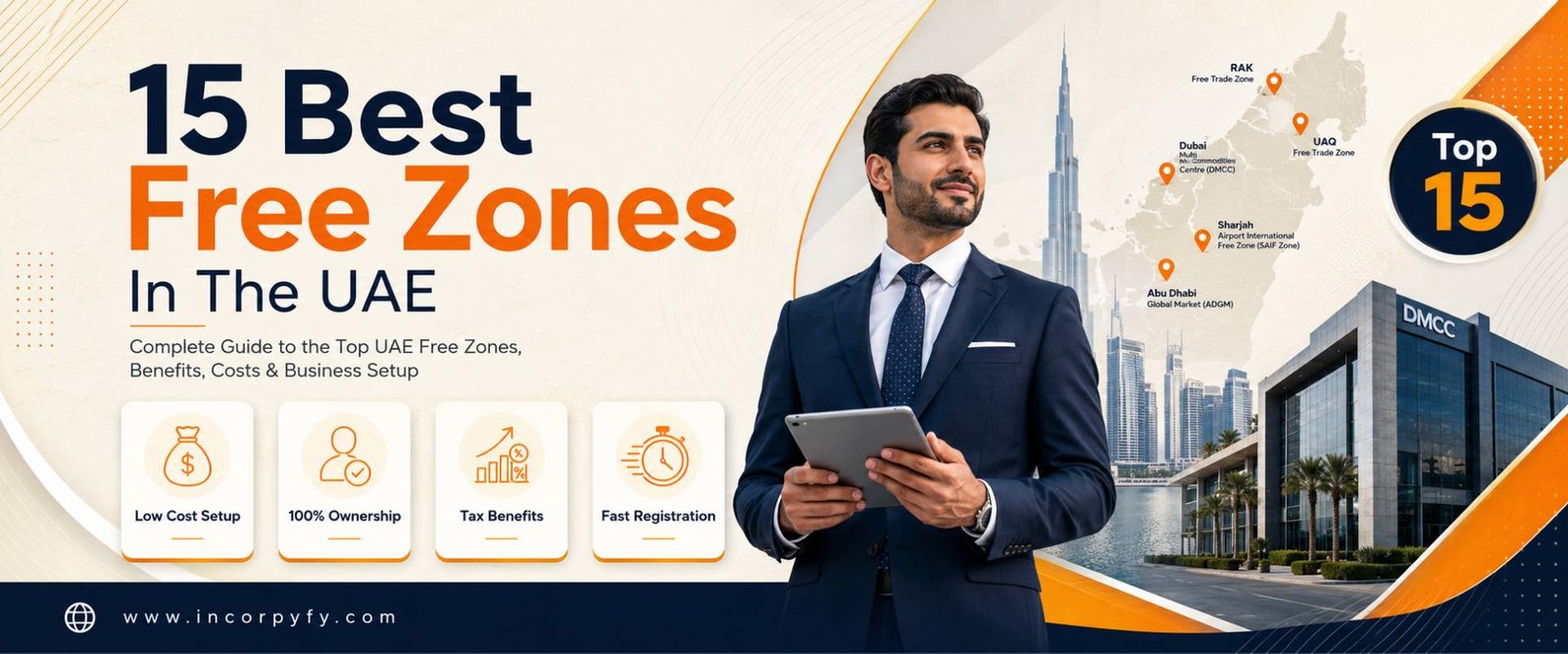
The UAE’s strongest free zones span very different specialties: DMCC for trading and commodities, DIFC and ADGM for finance, JAFZA for logistics, and SHAMS or Dubai Silicon Oasis for cost-conscious tech and media startups. The right choice depends on your activity, budget, and whether you need port access, a premium address, or the lowest possible setup cost. This guide ranks 15 free zones by what they actually do best, not just by price.
The United Arab Emirates has built one of the world’s most extensive free zone networks, and that’s exactly why choosing between them is harder than it looks. Each zone was built around a different industry, price point, and operating model, so “best” genuinely depends on what your business actually needs, not a single ranking that applies to everyone equally.
This guide walks through 15 of the UAE’s most established free zones, what each one specializes in, and how to think about the decision itself. If cost is your primary filter rather than specialization, our companion guide to the cheapest free zones in the UAE approaches the same landscape from a pure price angle, and our wider company formation coverage spans mainland and offshore options too if a free zone doesn’t end up being the right fit.
Understanding UAE Free Zones
Free zones are designated areas operating under their own legal and regulatory frameworks, built to attract foreign investment with a distinct set of advantages:
- 100% foreign ownership, removing the need for a local partner or sponsor across virtually every standard entity type
- Tax incentives, including 0% corporate tax on qualifying income for companies that meet Qualifying Free Zone Person conditions, alongside no personal income tax on salary or dividends
- Full repatriation of capital and profits, without restriction, which matters for foreign investors who want the flexibility to move funds internationally
- Customs duty exemptions on goods moving within and between free zones, a genuine cost advantage for trading and logistics businesses specifically
- Streamlined business setup, with most zones now running largely digital registration processes that can be completed without stepping foot in the UAE until later stages
These shared advantages are why free zones remain a default starting point for foreign investors, but the differences between zones, industry focus, cost, location, and banking reputation, matter just as much as the shared benefits once you’re actually choosing one. A zone that looks identical to another on paper can behave very differently once you’re actually trying to open a bank account or hire staff. Our team can walk through free zone business setup in Dubai in more depth if you want a fuller comparison before deciding.
How to Choose the Right Free Zone for Your Business
Before the list itself, it’s worth being clear about what actually should drive this decision, since “best” varies enormously by business type and a ranking that ignores your specific activity isn’t especially useful:
- What’s your core activity? Trading and logistics businesses gravitate toward JAFZA or DMCC; finance firms toward DIFC or ADGM; media and creative businesses toward D3 or SHAMS; tech companies toward Dubai Silicon Oasis or Dubai Internet City
- How much can you realistically budget? Premium zones like DIFC and DMCC carry meaningfully higher costs than budget-friendly options like SHAMS, in exchange for prestige, banking relationships, or sector-specific infrastructure that may or may not matter for your specific model
- Do you need port, airport, or warehouse access? If physical goods movement is central to your business, JAFZA, KIZAD, or Dubai South matter far more than a media-focused zone ever would, regardless of how well that zone performs on other criteria
- Does your client base care about your registered address? A DIFC or DMCC address carries real weight with certain enterprise and financial clients; for many service businesses, it simply doesn’t matter enough to justify the cost difference
- How many visas do you realistically need? Visa allocation models vary by zone, some scale with office size, others offer more generous baseline quotas regardless of space, and this can swing your total cost meaningfully depending on team size
- How important is banking ease? Some free zones have stronger, longer-established relationships with UAE banks, which can shorten what is often the slowest part of getting a new company fully operational
1. Dubai Multi Commodities Centre (DMCC)
Established in 2002, DMCC has grown into the single largest free zone community in the UAE, now home to more than 24,000 member companies, and has been named Global Free Zone of the Year by the Financial Times’ fDi Magazine for nine consecutive years, a streak no other free zone comes close to matching. Located in Jumeirah Lakes Towers, DMCC covers commodities trading, financial services, precious metals, logistics, and a genuinely large crypto and tech ecosystem, with a Crypto Centre alone hosting several hundred companies. Its scale and banking reputation make it a strong choice for trading businesses that want a mature, internationally recognized address, though costs sit toward the premium end of the market compared to zones built for lower-cost entry.
2. Dubai International Financial Centre (DIFC)
DIFC is the UAE’s leading financial hub, operating under an independent legal framework based on English common law since 2004. It’s home to major global banks, asset managers, and fintech companies, and its regulatory environment is specifically built for financial services rather than general commerce. DIFC suits firms where regulatory credibility and proximity to other financial institutions genuinely matter more than setup cost, and its own court system gives investors a familiar dispute-resolution framework that pure UAE civil courts don’t offer in the same way.
3. Jebel Ali Free Zone (JAFZA)
JAFZA, established in 1985, remains one of the largest and most established free zones in the UAE, built around direct access to Jebel Ali Port, one of the busiest container ports in the Middle East. With over 9,000 companies across logistics, manufacturing, and trading, JAFZA is the natural choice for businesses that need genuine port and warehouse infrastructure rather than just an office address, and it increasingly supports a dual-license model that lets companies also trade on the Dubai mainland. For a deeper look at licensing and cost, our guide to Jebel Ali Free Zone company formation covers this in full.
4. Dubai Design District (D3)
D3, launched in 2013, is dedicated to fashion, design, art, and luxury goods, with creative studios, showrooms, and a genuinely active events calendar. It suits creative businesses that benefit from being physically close to other design-focused companies rather than operating remotely.
5. Dubai Silicon Oasis (DSO)
DSO combines a technology-focused free zone with an integrated residential community, now operating under the Dubai Integrated Economic Zones Authority (DIEZ) rather than its original standalone regulator. It’s a strong fit for IT, fintech, and R&D companies, especially through DTEC’s startup ecosystem. Our full guide to registering a company in Dubai Silicon Oasis covers current costs and process.
6. Abu Dhabi Global Market (ADGM)
ADGM, established in 2013, is Abu Dhabi’s answer to DIFC: an independent financial free zone operating under English common law, home to banks, asset managers, and fintech firms. It’s the natural choice for financial services businesses specifically targeting Abu Dhabi rather than Dubai.
7. Sharjah Media City (SHAMS)
SHAMS delivers media, creative, and general business licensing at meaningfully lower cost than comparable Dubai zones, with licenses starting from roughly AED 5,750 and a visa allocation of up to 50 per license, unusually generous relative to office size. It’s a strong fit for cost-conscious media, e-commerce, and service businesses. Our guide to registering a company in SHAMS covers the current process and costs.
8. Ras Al Khaimah Economic Zone (RAKEZ)
RAKEZ offers flexible setup options across manufacturing, logistics, and services, with industrial parks and co-working facilities that suit both small startups and larger industrial operations. Its lower cost base relative to Dubai zones makes it a genuine option for founders prioritizing value without sacrificing infrastructure.
9. Masdar City Free Zone
Masdar City focuses specifically on sustainable and clean technology businesses, offering research and development support alongside an eco-focused physical campus. It suits renewable energy and environmental solutions companies more than general commercial activity.
10. Dubai Aviation City (DAC)
Located next to Dubai World Central (DWC) Airport, DAC serves aviation-specific businesses: MRO services, aviation training, and logistics. It’s a narrow but genuinely well-suited option if your business is aviation-specific rather than general trading or services.
11. Dubai Internet City (DIC)
One of Dubai’s earliest free zones, established in 1999, DIC remains a strong hub for established technology companies and software developers, offering data center access and a genuinely dense tech ecosystem.
12. Khalifa Industrial Zone Abu Dhabi (KIZAD)
KIZAD is a large-scale industrial free zone near Khalifa Port, offering industrial land plots and pre-built warehouses for manufacturing, logistics, and heavy industry, particularly aluminium, steel, and petrochemicals.
13. Dubai South
Positioned next to Al Maktoum International Airport, Dubai South focuses on aviation, logistics, and real estate development, with infrastructure built around Expo City Dubai and the emirate’s long-term aviation growth plans.
14. Dubai CommerCity
Dubai CommerCity focuses specifically on e-commerce, trade, and logistics, with warehousing and distribution facilities built for import, export, and re-export activity rather than general office-based businesses.
15. Sharjah Airport International Free Zone (SAIF Zone)
SAIF Zone, adjacent to Sharjah International Airport, suits manufacturing, logistics, and trading businesses looking for a lower-cost alternative to Dubai’s industrial zones, with industrial land and warehousing available alongside standard office packages.
Choosing Between Similar Zones
A few of these overlap enough that a direct comparison matters more than the individual write-ups above. If you’re deciding between JAFZA and a budget alternative for a trading or logistics business, or between SHAMS and other media-focused zones, working through both options against your specific activity, rather than picking based on name recognition alone, avoids a costly mismatch later. Our team can walk through business setup in Dubai options across all of these zones together if you’re still narrowing your shortlist.
Common Mistakes When Choosing a Free Zone
- Picking based on prestige alone, without checking whether the zone’s activity list, visa rules, and cost actually fit your business model
- Ignoring banking reputation, since some free zones make corporate bank account approval meaningfully easier than others due to established relationships
- Overlooking physical infrastructure needs, choosing a media or finance-focused zone for a business that actually needs warehouse or port access
- Assuming the cheapest option is always right, when a slightly higher-cost zone with better banking relationships or sector reputation can save more in the long run than it costs upfront
Conclusion
The UAE’s free zones have been central to the country’s foreign investment growth, and picking the right one comes down to matching your specific activity, budget, and infrastructure needs against what each zone actually specializes in rather than choosing by reputation alone. Whether you need DMCC’s trading scale, DIFC’s financial credibility, JAFZA’s port access, or SHAMS’s cost efficiency, the right fit exists among these fifteen, provided the decision is made deliberately.
At Incorpyfy, we guide businesses through company formation in Dubai and the wider UAE, including free zone setups across every zone covered here. Get in touch and we’ll help you match your business to the right free zone rather than the most familiar name.
FAQs
Which is the best free zone in the UAE for a small business?
It depends on activity. SHAMS and RAKEZ suit cost-conscious small businesses well, while DMCC or DIFC suit small businesses in trading or finance specifically where the added cost buys real credibility with clients and banks.
Which UAE free zone is best for trading businesses?
JAFZA and DMCC are the strongest options for trading, given port access and established trading infrastructure, though JAFZA suits physical goods and logistics more directly.
Which free zone is cheapest to set up in?
SHAMS and RAKEZ are generally among the most affordable, with SHAMS licenses starting around AED 5,750. Our cheapest free zones in the UAE guide covers this comparison in more depth.
Can I set up a company in more than one free zone?
Yes, businesses can hold licenses in multiple free zones, though each requires its own registration, fees, and compliance obligations, so this only makes sense when the activities genuinely require separate jurisdictions.
Do all UAE free zones allow 100% foreign ownership?
Yes, this is a standard feature across free zones, unlike some mainland activities which historically required a local partner, though mainland ownership rules have also opened significantly in recent years.
Is DIFC or ADGM better for a financial services company?
It depends on which emirate fits your target market. DIFC serves Dubai-focused financial businesses, while ADGM serves those specifically targeting Abu Dhabi, and both operate under similar English common law frameworks.
Which free zone offers the most visas relative to cost?
SHAMS stands out here, offering up to 50 visas per license independent of office size, which is unusually generous compared to zones that tie visa allocation strictly to leased space.
Do free zone companies pay UAE corporate tax?
Free zone companies that qualify as a Qualifying Free Zone Person can access 0% corporate tax on qualifying income, while non-qualifying income is taxed at the standard rate, so it’s worth confirming your specific activity’s status rather than assuming blanket exemption.