


Summary
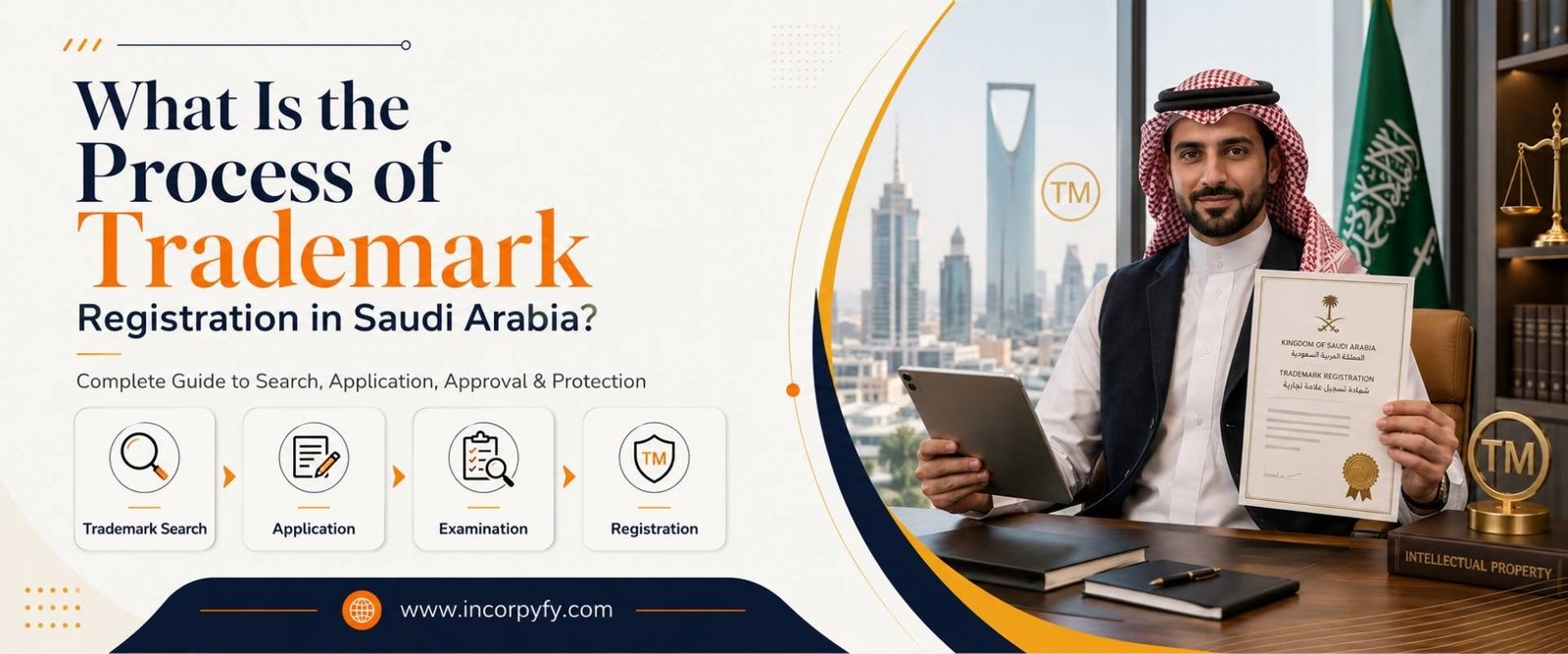
Trademark registration in Saudi Arabia runs through the Saudi Authority for Intellectual Property (SAIP), taking roughly 3 to 4 months from search to certificate, with total costs typically SAR 5,000 to 8,000. A registered trademark is valid for 10 years, renewable indefinitely in further 10-year terms. Since Saudi Arabia’s 2023 accession to the Madrid Protocol, foreign applicants also have an international registration route to consider alongside a direct SAIP filing. This guide covers the real process, costs, and the mistakes that most commonly delay approval.
If you’re doing business in the Kingdom of Saudi Arabia, protecting your brand matters more than ever given how quickly the market is growing under Vision 2030. A trademark is the legal shield that protects your business name, logo, product identity, or slogan from being copied or misused by competitors or opportunistic third parties. This guide explains who can apply, what can be registered, the real process and costs, and a significant international registration option most guides on this topic still don’t mention at all.
What Is a Trademark?
A trademark is a unique symbol, word, design, or combination that distinguishes your goods or services from others, functioning as your business’s legal identity in the marketplace. In Saudi Arabia, trademarks are regulated by the Saudi Authority for Intellectual Property (SAIP) and protected under national law once officially registered. Without registration, your brand remains genuinely vulnerable to imitation and costly disputes.
Why Trademark Registration Matters
- Exclusive legal rights to use the brand within the Kingdom
- Prevents others from copying or using a confusingly similar brand
- Protects your reputation and brand identity as your business grows
- Enables real legal action against counterfeiters or infringers
- Adds tangible value to your business for franchising, licensing, or eventual sale
- Makes expansion into GCC and international markets considerably smoother
With Saudi Arabia’s economic diversification under Vision 2030 attracting rising levels of foreign investment, registering your trademark early is a genuinely practical safeguard, not just a legal formality.
Who Can Register a Trademark in Saudi Arabia?
- Saudi nationals or residents operating a business
- Foreign companies with a local license or authorised representative
- Legal entities registered in the Kingdom
- Trademark agents acting on behalf of a company
Foreign investors typically need either a locally registered business or a licensed trademark attorney acting on their behalf. If you’re setting up a company alongside your trademark filing, our guide to obtaining a MISA license in Saudi Arabia covers the foreign investment licensing route directly.
What Can Be Registered as a Trademark?
- Words and names (brand names, slogans, phrases)
- Logos and graphic designs
- Letters or numerals used as brand identifiers
- Product packaging designs
- Sounds, including jingles, Saudi Arabia has issued sound trademark certificates
- Colour combinations, where distinctively tied to a specific product
- Trade dress, the overall look of a product or store layout
Generic names, immoral phrases, religious symbols, and deceptive marks aren’t eligible for registration.
Important Update: Saudi Arabia and the Madrid Protocol
This is a development most guides on this topic still haven’t incorporated. In late 2023, Saudi Arabia’s Council of Ministers approved accession to the Madrid Protocol, the international system for registering trademarks across multiple countries through a single application. This gives foreign applicants, and Saudi businesses expanding abroad, a genuine alternative to filing separately in each jurisdiction, which used to be the only realistic option before this accession.
Practically, this means you now have two real paths into Saudi trademark protection: a direct national filing with SAIP, generally faster and more straightforward for a single-market focus, or an international registration designating Saudi Arabia through the Madrid system, more efficient if you’re protecting the same mark across several countries simultaneously rather than filing country by country. Confirm current procedural details for the Madrid route directly with SAIP or a qualified IP advisor, since implementation details continue to develop following accession, and the practical experience of using this route is still relatively new.
Trademark Registration Process: Step-by-Step
Step 1: Conduct a Trademark Search
Before applying, run a preliminary search through SAIP to confirm your mark isn’t already registered or too similar to an existing one. This single step meaningfully reduces rejection risk and speeds up everything that follows.
Step 2: Prepare Your Documents
- Trademark representation (logo or wordmark)
- Applicant’s commercial registration certificate
- Power of Attorney, if using a trademark agent
- Certified translation of documents not already in Arabic
Step 3: Submit the Application Online
File through the official SAIP portal, completing the application form, uploading required documents, and paying the application fee.
Step 4: Formal Examination
SAIP examines the application for completeness, legality and distinctiveness of the mark, and potential conflict with existing trademarks before proceeding.
Step 5: Publication in the Official Gazette
Approved applications are published in the Saudi Official Gazette for a 60-day opposition period, during which any third party can formally object to the registration.
Step 6: Registration and Certificate Issuance
If no opposition is filed, the trademark is officially registered, and a certificate is issued confirming your exclusive rights.
Trademark Duration and Renewal
Once registered, a Saudi trademark is valid for 10 years from the filing date, renewable indefinitely in further 10-year periods, provided renewal is filed on time.
Renewal process:
- Start renewal at least 6 months before expiry
- File online through the SAIP portal
- Pay the applicable renewal fee
- No new publication or opposition stage applies to a straightforward renewal
Failing to renew on time can result in cancellation, leaving your brand genuinely vulnerable to third-party registration of the same or a similar mark.
Real Costs
| Fee Type | Estimated Cost (SAR) |
|---|---|
| Trademark search | 200 – 300 |
| Application filing | 1,000 – 1,500 |
| Publication fee | 1,000 – 1,200 |
| Final registration certificate | 3,000 – 4,000 |
| Renewal (every 10 years) | 4,000 – 5,000 |
Working with a licensed trademark consultant adds professional service fees on top of these government charges, generally worthwhile given how much a rejected or improperly filed application can cost in lost time and resubmission fees.
Trademark Classes in Saudi Arabia
Saudi Arabia follows the international Nice Classification System, dividing goods and services into 45 classes: classes 1-34 cover goods, and 35-45 cover services. Multiclass applications aren’t permitted, meaning you must file, and pay, a separate application for each class relevant to your business. Common examples include:
- Class 35: retail and marketing services
- Class 9: software and electronic devices
- Class 43: restaurants and food services
Registering under the wrong class leaves your mark genuinely unprotected in the area where your business actually operates, worth getting right at filing rather than discovering the gap during a dispute.
Can Foreign Companies Register a Trademark in Saudi Arabia?
Yes, provided they have a registered entity or commercial license in Saudi Arabia, or work through a trademark agent or legal representative, and their mark doesn’t conflict with existing local registrations. Saudi Arabia’s membership in international treaties like TRIPS and the Paris Convention, alongside its more recent Madrid Protocol accession, gives foreign trademark holders real, layered protection options.
Trademark Infringement and Legal Protection
Unauthorised use of your registered trademark constitutes infringement, with remedies including cease and desist notices, lawsuits and court orders, compensation for damages, and seizure of counterfeit goods. SAIP provides tools for reporting violations and enforcing intellectual property rights directly.
Common Mistakes to Avoid
- Skipping the pre-filing search. This is the single most avoidable cause of rejection or costly opposition later, and it takes only a few days to complete properly.
- Using descriptive or generic terms as your mark. These face a genuinely higher rejection risk under Saudi trademark law, regardless of how well they might describe your product or service.
- Submitting incomplete or inaccurate documents. This resets your application timeline rather than just adding a minor delay, since the examination stage restarts from the point of resubmission.
- Filing under the wrong class. Protection only extends to the classes you actually register under, not your business generally, so a mismatch here can leave you unprotected in exactly the area that matters most.
- Delaying publication fee payment. This can stall your application at a stage that’s otherwise ready to proceed, an entirely avoidable bottleneck.
- Missing the renewal window. With no grace period built into a straightforward renewal process, starting 6 months ahead of expiry is the safer default rather than waiting until closer to the deadline.
Realistic Timeline
- Trademark search: 1 to 3 days
- Application submission: instant
- Formal examination: 30 to 45 days
- Publication and opposition period: 60 days
- Final registration: 1 to 2 weeks after publication closes
Total: typically 3 to 4 months, depending on whether any opposition is filed and how complete your documentation is at submission.
Trademark vs. Trade Name vs. Copyright
- Trademark: protects logos, brand names, and product identity
- Trade Name: your business’s legal registered name, a separate registration entirely
- Copyright: protects artistic, written, or digital creative work
These are genuinely distinct protections, registering one doesn’t cover the others, so businesses with valuable branding, naming, and creative assets should consider registering each separately rather than assuming one filing covers everything.
Frequently Asked Questions
How long is a trademark valid in Saudi Arabia?
10 years from the filing date, renewable indefinitely in further 10-year periods.
Can a foreigner register a trademark in Saudi Arabia?
Yes, through a locally registered entity or an authorised legal representative, and now also potentially through the Madrid Protocol following Saudi Arabia’s 2023 accession.
Do I need to register in Arabic?
The trademark must be registered in Arabic, though foreign names and logos can be protected alongside their translations.
Can I register the same trademark under different classes?
Yes, but multiclass applications aren’t permitted; you must file and pay separately for each relevant class.
What happens if my trademark isn’t renewed?
It expires and becomes available for third-party registration, potentially leaving your brand vulnerable to being claimed by someone else entirely.
Has Saudi Arabia joined the Madrid Protocol?
Yes, its Council of Ministers approved accession in late 2023, adding an international registration route alongside direct SAIP filing.
How long does the full registration process take?
Typically 3 to 4 months from initial search to certificate issuance, assuming no opposition is filed during the 60-day publication period.
Get Support With Your Saudi Arabia Trademark Registration
Trademark registration in Saudi Arabia is one of the most straightforward ways to protect your brand identity as you establish or expand in the Kingdom, provided the application is filed correctly the first time and against the class that actually matches your business.
Incorpyfy supports businesses with business setup in Saudi Arabia alongside brand protection, helping you register both your company and your trademark correctly from the outset. If you’re still exploring your Saudi market entry more broadly, our roundup of business ideas in Saudi Arabia covers a range of Vision 2030-aligned opportunities worth weighing alongside your brand strategy.