

Summary
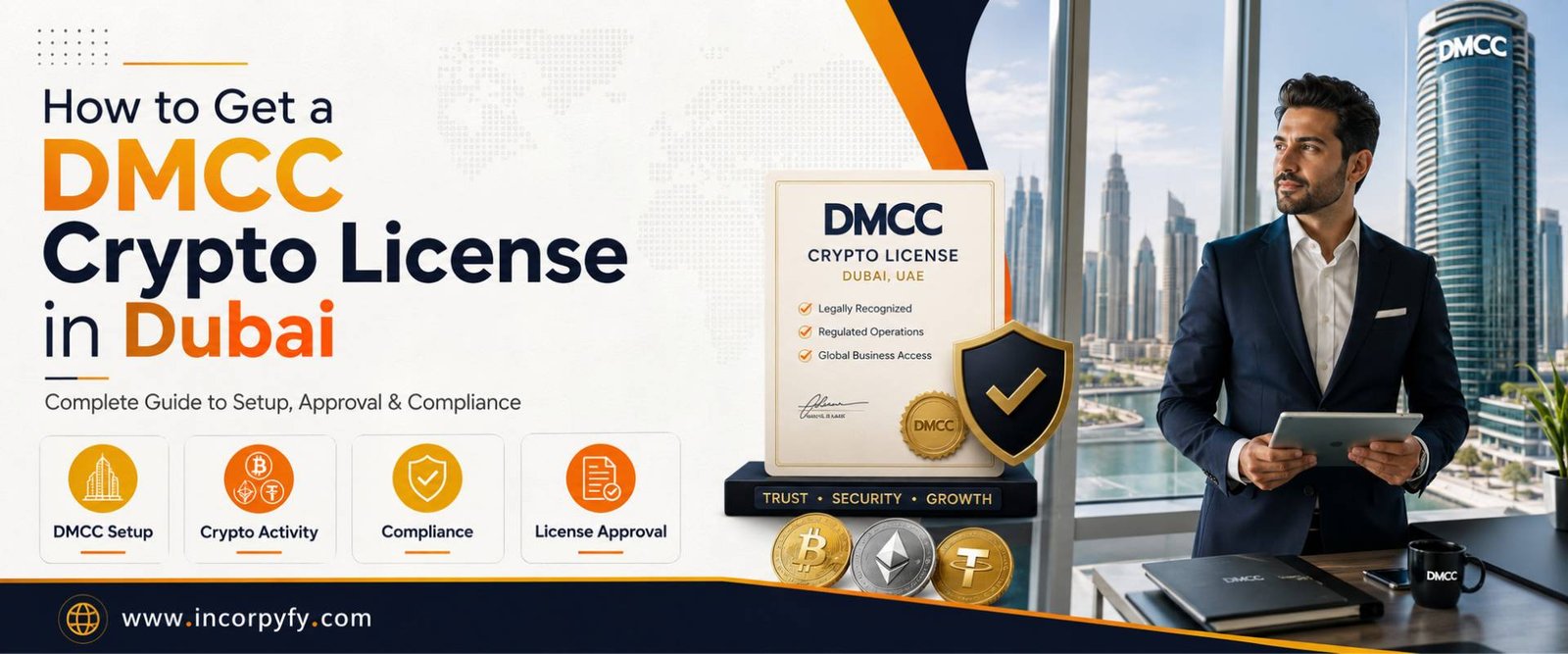
DMCC offers two genuinely different routes into crypto licensing, one that avoids VARA regulation entirely and one that requires it. Getting this choice right determines your cost, your timeline, and what your business can legally do. A proprietary trading setup through the DMCC Crypto Centre can cost as little as AED 34,000, while client-facing activities require full VARA approval and substantially higher capital. This guide breaks down both paths in detail.
The One Decision That Determines Everything
Before anything else, DMCC licensing comes down to a single question: are you trading with your own capital, or are you handling money or assets that belong to clients? The answer sorts every crypto business into one of two completely different regulatory tracks, and confusing the two is the single most expensive mistake founders make when approaching DMCC.
Proprietary trading, blockchain development, NFT platforms without financial intermediation, and crypto mining operations can be licensed through DMCC alone, without any involvement from Dubai’s Virtual Assets Regulatory Authority. Exchange operations, custody services, broker-dealer functions, advisory services, lending, and asset management involving virtual assets all require VARA approval on top of the DMCC license, regardless of which free zone you register in. This guide walks through both paths in full, because the right one for your business depends entirely on what you actually plan to do, not on which path sounds simpler.
Path One: Proprietary Trading Through the DMCC Crypto Centre
If your business trades crypto commodities using its own capital and does not accept deposits, manage funds, or provide services to external clients, DMCC’s Crypto Centre offers a genuinely fast, VARA-free route to a UAE license.
Activities covered under this path include proprietary trading in crypto-commodities, Distributed Ledger Technology services for blockchain development work, NFT marketplace operations that do not involve financial intermediation, metaverse platform development, and crypto mining. The application moves through DMCC’s standard company registration process with an activity classification specific to the Crypto Centre, and because no external regulator needs to sign off, processing typically completes in around four weeks from submission to license issuance.
This is the path most founders assume applies to their business, and for pure trading operations or technology-focused crypto ventures, it genuinely does. The moment your business model involves holding, managing, or trading on behalf of someone else, however, you have crossed into the second path whether your license reflects that or not, which creates real regulatory exposure if the activity classification does not match what the business actually does.
Path Two: Client-Facing Activities That Require VARA
Any crypto business that touches client money or client assets needs approval from the Virtual Assets Regulatory Authority in addition to its DMCC license. This covers running an exchange, offering custody or wallet services, acting as a broker-dealer, providing investment advisory on virtual assets, lending against crypto holdings, or managing assets on behalf of clients.
The VARA approval process runs separately from DMCC’s own registration and generally takes considerably longer, commonly eight to twelve weeks depending on the specific activity and how quickly the application demonstrates the required governance, custody arrangements, and compliance infrastructure. Capital requirements scale sharply here as well, since VARA sets minimum capital and, for some activities, requires funds to be held in segregated accounts rather than commingled with operating capital. Our detailed guide to getting a crypto exchange license in Dubai covers the VARA-specific process, capital tiers, and application stages for exchange and broker-dealer activities in full depth, since that process is largely independent of which free zone issues the underlying trade license.
Why DMCC Built a Separate Crypto Centre At All
DMCC’s Crypto Centre exists because the free zone recognized early that most blockchain and crypto businesses were technology and trading operations, not financial services providers, and building a licensing pathway that reflected that distinction gave DMCC a genuine competitive advantage over free zones that treated every crypto-adjacent activity as requiring the same heavy compliance burden. The result is one of the largest concentrations of crypto and blockchain companies in any single UAE free zone, built specifically around the idea that proprietary trading, development, and mining businesses should not need to clear the same bar as a public-facing exchange.
This history matters practically because it explains why DMCC’s activity list for crypto is unusually detailed compared to most free zones, and why the zone continues to attract both pure technology plays and, increasingly, VARA-licensed financial businesses that want the ecosystem and community DMCC has built even though their own licensing runs through a separate regulator.
What Actually Sits Inside the DMCC Crypto Centre
Beyond the licensing structure itself, the Crypto Centre functions as a physical and community hub within DMCC’s Jumeirah Lakes Towers location, offering dedicated office space, a concentration of blockchain and crypto-focused businesses as neighbors, and connections to banking and service providers who are already familiar with crypto-related compliance requirements, a genuine advantage given how cautious many UAE banks remain toward crypto-adjacent accounts generally. For founders specifically, being licensed inside a recognized crypto ecosystem, rather than as an unusual case within a generalist free zone, measurably speeds up conversations with banks and service providers who would otherwise need convincing that the business is legitimate and appropriately regulated.
The Real Cost Breakdown by Path
Costs diverge sharply between the two paths, and comparison pages that quote a single number for “DMCC crypto license cost” are almost always describing only the proprietary trading route.
Proprietary trading path (no VARA):
- License application and DMCC approval: AED 12,000 to 18,000
- Dubai Municipality trade license component: AED 3,500 to 5,500
- Compliance officer and internal governance setup: AED 8,000 to 12,000
- Audit and governance framework: AED 6,000 to 10,000
- Office and premises registration within the Crypto Centre: AED 5,000 to 8,000
- Total setup cost: approximately AED 34,000 to 54,000
- Minimum capital: typically AED 100,000 to 250,000, held in a segregated account
- Annual renewal and compliance: AED 8,000 to 15,000
Client-facing path (VARA required, on top of the above):
VARA-regulated activities carry substantially higher capital requirements than the proprietary trading baseline, with specific tiers depending on the activity and whether the business holds client custody. Application and annual supervision fees are set separately by VARA rather than DMCC, and the combined cost of a VARA-approved exchange or custody business commonly runs into several hundred thousand dirhams once licensing, capital, legal, and compliance infrastructure are all included. Our guide on crypto exchange licensing costs in Dubai breaks these figures down activity by activity.
Documents and Compliance Requirements
Both paths share a common documentation baseline: passport copies for all shareholders and directors, a detailed business plan describing the specific crypto activity, proof of source of funds for the paid-up capital, and a registered office address within DMCC. The proprietary trading path additionally requires an internal compliance and governance framework covering how the business will handle its own trading activity, even without client-facing obligations, since DMCC still expects demonstrable internal controls before issuing the license.
The VARA path adds substantially to this baseline: a full compliance program covering anti-money laundering procedures, know-your-customer processes, custody arrangements if applicable, a nominated compliance officer with relevant experience, and, depending on the activity, ongoing audited financial reporting. Our guide to crypto asset audits in Dubai covers what this audit obligation involves in practice for businesses that reach this stage.
Timeline: How Long Each Path Actually Takes
Proprietary trading licenses through the Crypto Centre typically complete in around four weeks from a complete application, broadly in line with a standard DMCC company registration timeline. VARA-regulated activities take considerably longer, generally eight to twelve weeks, and can extend further if the application requires revisions to satisfy custody, capital, or governance requirements. Businesses planning a launch date should build the VARA timeline in as a genuine project dependency rather than assuming it runs in parallel with routine company setup steps, since VARA review stages are sequential and each one needs to clear before the next begins.
Banking a DMCC Crypto Company, and Why It Is Its Own Project
Getting licensed is rarely the hardest part of launching a crypto business in the UAE. Opening a functioning corporate bank account is. UAE banks apply significantly more scrutiny to crypto-related businesses than to standard trading or consultancy companies, regardless of how clean the license itself is, and a proprietary trading license alone does not guarantee an account will be approved.
Being physically located within DMCC’s Crypto Centre genuinely helps here, since several banks and payment providers have built specific onboarding relationships with businesses inside that ecosystem precisely because the concentration of crypto companies there has forced the issue. Even so, expect the bank’s own compliance review to run in parallel with, not automatically following, your DMCC license approval, and to require a detailed business plan, source of funds documentation for both the company’s capital and its beneficial owners, and in many cases a call or in-person meeting with the bank’s compliance team before an account is opened. Budgeting extra time for this step, separate from the licensing timeline itself, avoids the common situation where a business is legally licensed but unable to actually operate for weeks afterward.
Corporate Tax Treatment for Crypto Businesses
DMCC crypto companies, like other UAE free zone entities, fall under the federal corporate tax framework and are technically subject to 9 percent tax unless they qualify for Qualifying Free Zone Person treatment, which allows 0 percent tax on qualifying income. For proprietary trading businesses, qualifying income generally needs to come from transactions with other free zone entities or from overseas counterparties, which is worth structuring counterparty relationships around deliberately rather than discovering the requirement after a tax year has already closed. Businesses holding VARA licenses face additional considerations depending on how client relationships and revenue are structured. Our guide to registering and filing corporate tax in the UAE covers the qualifying income rules that apply across free zone entities generally, crypto businesses included.
DMCC, IFZA, or VARA Direct: Which Track Fits Your Business
DMCC’s Crypto Centre is the strongest fit for proprietary trading firms, blockchain development companies, and crypto mining operations that want a purpose-built ecosystem and do not need VARA approval at all. Our guide to getting a crypto license through IFZA covers a comparable but distinct free zone alternative, worth checking specifically if your activity list or budget points away from DMCC’s Crypto Centre pricing.
For any business that will touch client funds or assets, the free zone choice matters less than the VARA approval itself, since that regulatory layer applies regardless of which zone issues the underlying trade license. In that case, the decision becomes less about DMCC versus another free zone and more about which zone offers the best operational fit, banking relationships, and cost structure to sit underneath a VARA license. Our complete overview of crypto licensing in Dubai walks through this broader landscape, including DIFC’s separate financial free zone framework as a further alternative for larger, institutionally-backed ventures.
Common Mistakes That Blur the Two Paths
A handful of recurring errors account for most compliance problems seen in DMCC crypto setups.
- Registering under the proprietary trading activity classification while the business model quietly evolves to include client deposits or managed accounts, without updating the license or seeking VARA approval
- Assuming DMCC’s own approval covers all regulatory exposure, when VARA operates as a fully separate authority with its own enforcement powers
- Underestimating the capital segregation requirement for proprietary trading, which still requires the stated minimum capital held separately rather than mixed into general operating funds
- Choosing DMCC purely for its crypto ecosystem reputation without confirming the specific activity code matches the actual business plan, which can trigger a licensing amendment later
- Delaying VARA engagement until the DMCC license is already issued, rather than running both processes in parallel where the business model requires both from day one
Getting Licensed the Right Way
The proprietary trading path through DMCC’s Crypto Centre is genuinely one of the fastest, most cost-effective ways to license a crypto business in the UAE, provided the activity genuinely stays within that classification. The moment client funds or managed services enter the picture, the VARA process becomes the real determinant of timeline and cost, and DMCC’s role becomes secondary to getting that regulatory approval right. A consultant experienced with both DMCC’s Crypto Centre and VARA’s application process can confirm which path your specific business model actually falls under before you commit capital to either route, which is worth doing before, not after, you have already filed. For a broader view of DMCC company formation beyond crypto-specific activities, our dedicated free zone guide covers the zone’s full licensing scope.
Frequently Asked Questions
Do I need a VARA license to trade crypto through DMCC?
Only if you are handling client funds or providing services to external clients. Proprietary trading using your own capital can be licensed through DMCC’s Crypto Centre without VARA involvement.
How much does a DMCC crypto license cost?
A proprietary trading license through the Crypto Centre typically totals AED 34,000 to 54,000 in setup costs, plus minimum capital of AED 100,000 to 250,000 held in a segregated account. Client-facing activities requiring VARA approval cost substantially more once VARA’s own fees and capital requirements are included.
How long does DMCC crypto licensing take?
Proprietary trading licenses generally complete in around four weeks. VARA-regulated activities take considerably longer, typically eight to twelve weeks, due to the separate regulatory review process.
Can a DMCC crypto company later add client-facing activities?
Yes, but this requires obtaining VARA approval before offering those services, along with an amendment to the DMCC license activity classification. It is not something that can be added informally without the underlying regulatory approval.
Is DMCC better than IFZA for a crypto business?
It depends on your activity and budget. DMCC’s Crypto Centre offers a purpose-built ecosystem and banking familiarity with crypto businesses specifically, while IFZA offers broader general activity flexibility and, in some cases, lower entry costs for crypto-adjacent activities.
What happens if my crypto business operates outside its licensed activity scope?
Operating client-facing services under a proprietary trading license carries real regulatory risk, since VARA has independent enforcement authority over virtual asset activities regardless of which free zone issued the underlying trade license. Confirming your activity classification matches your actual business model is essential before launch.
Does DMCC require a minimum capital for crypto companies?
Yes, proprietary trading activities typically require AED 100,000 to 250,000 in minimum capital held in a segregated account, with VARA-regulated activities requiring substantially more depending on the specific service offered.
How hard is it to open a bank account for a DMCC crypto company?
Harder than for a standard trading license, though genuinely achievable. UAE banks apply extra compliance scrutiny to crypto businesses specifically, and being located within DMCC’s Crypto Centre helps since several banks have established onboarding relationships with businesses there. Expect the bank’s review to run as a separate process from license approval, often adding several weeks before the account is fully operational.
Can I mine cryptocurrency legally in Dubai through a DMCC license?
Yes, crypto mining is one of the activities covered under the proprietary trading path through DMCC’s Crypto Centre, and does not require VARA approval as long as the operation is limited to mining rather than offering mining-as-a-service to external clients, which would shift it toward client-facing activity.
What is the difference between DMCC’s Crypto Centre and a standard DMCC trade license?
The Crypto Centre uses a specific activity classification built for crypto, blockchain, and digital asset businesses, with its own compliance expectations around internal governance and capital segregation. A standard DMCC trade license covers unrelated commercial activities and does not carry these crypto-specific requirements.